New EPC Minimum Energy Rating – C
This page is being updated and will be back shortly
Current EPC Legislation
Since October 2008, all domestic rental properties in England and Wales have required an Energy Performance Certificate (EPC). Visit our What Is An EPC? page to find out how an EPC is produced and what it includes. The key information in an EPC is a properties Energy Efficiency which is rated on a scale of A to G, A being the highest rating and G being the lowest. There have been two key amendments to the legislation since it began.
- From 1st April 2018 Minimum Energy Efficiency Standards (MEES) came into force. This required all new tenancies to have a minimum EPC rating of ‘E’ or above.
- From 1st April 2020 the Minimum Energy Efficiency Standards were applied to all tenancies, new and existing.
So, it is currently illegal to let, or market any property for letting, if it does not have a valid EPC with an Energy Rating of ‘E’ or above.
Landlords and Agents can face financial penalties if they let a property, or market a property for let in any way and there is no valid EPC or the Energy Efficiency Rating on the EPC is F or G. Fines currently start at £200 for an individual property and this can increase depending on the circumstances e.g. the number of properties owned or managed that are in breach of the legislation and the length of time that they have been in breach. Fines are issued by Trading Standards without the need for court proceedings and finding any breach in legislation could open the door to further scrutiny.
There is a 'spend cap' on what the government expects a landlord to spend to make the improvements required to bring their property to within the minimum standards. This cap is currently £3,500 inc Vat. If the landlord can demonstrate that they have spent this amount but the EPC is still below the minimum E rating, the landlord can apply for an exemption which will allow them to let the property despite the rating. Exemptions only last for 5 years at which point the landlord would have re-apply for an exemption if one is still needed. Find out more on our Exemptions Tab.
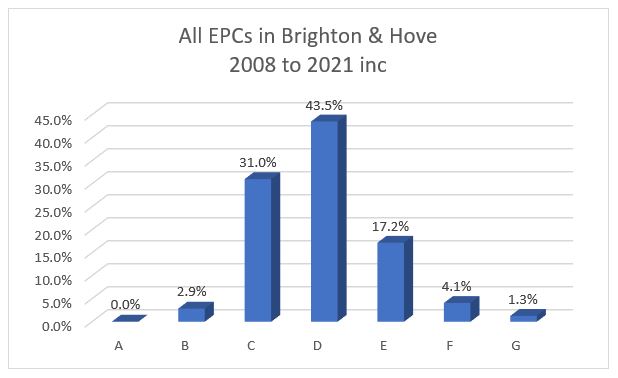
Just over 5% of valid EPCs have a rating of F or G. This puts them below the minimum rating required for rental. A much larger percentage of EPCs have expired and are therefore invalid. There were over 40 thousand EPCs lodged in Brighton & Hove from 2008 to 2012. They have now all expired and many of them have not been renewed despite the fact the properties are still being let.
This page is being updated and will be back shortly
EPC Exemptions
There are circumstances where a landlord can seek an exemption from the EPC minimum standards requirement. All exemptions must be registered on the national PRS Exemptions Register (PRS meaning 'private rented sector'). The Trading Standards department of the local authority monitors and processes all exemption requests. The Department for Business, Energy and Industrial Strategy (BEIS) also monitors the exemption register to gauge the impact of the legislation. Exemptions usually last for 5 years at which point the landlord would need to re-register.
In order to register, landlords will need to have the full address details of the, which exemptions are to be registered and a valid EPC for the property. Depending on the exemption sought, landlords may need to provide written evidence or reports from appropriate sources, such as an architect, chartered engineer or surveyor, that support the reason for the exemption. If a property is sold all exemptions are ended and a new owner would need to reapply.
Examples of where an exemption might apply